Electronic Dance Music in Context
Annotated Bibliography
Selected articles and monographs on the subject of house and techno music. Exploring aesthetics, culture, and identity.
Annotated Bibliography
Selected articles and monographs on the subject of house and techno music. Exploring aesthetics, culture, and identity.
Annotated Bibliography
A collection of books relating to themes of contemporary library design and the "experience economy."
Research / Essay
An investigation into the historical and social contexts that guided the design of the Malmö City Library in Sweden.
Research / Essay
Explores the history of the library as a venue for experience and inspiration.
Much of the first wave of research and writing on house music was published in the early 1990s, in the wake of an initial explosion of global popularity that led to “rave” culture and electronic dance music’s arrival as part of the mainstream popular music landscape. Though house and techno music originated in the 1980s, at first mostly localized to pockets of activity in Chicago, Detroit, and New York, there is little evidence of scholarly attention before 1990.
Once underway, this initial discourse surrounding house music often attempted to situate the genre within a larger context, such as by examining the social or economic conditions guiding its production and consumption. The following citations have been organized according to three contextual references, here named Aesthetic Connections, Geographical Resonance, and Cultural Identity. Despite this categorization, many of the works listed below do offer readings useful beyond those implied by their particular heading. I have also included several additional book-length introductory texts, either aimed at a more popular audience or offering a general introduction to the study of a particular aspect of electronic dance music.
Please note the bibliography below has been prepared with an expected user base of members of the UIUC community.
As a new genre of popular music, or set of genres, scholars have shown interest in how electronic dance music has been understood within the elaborate web of connections and mutual influence that characterize the contemporary music landscape. The following articles address both the specific musical features that mark house and techno as unique genres, and critique the systems that have generated those names.
 |
[chapter] “Feel the Beat Come Down: House Music As Rhetoric.” Analyzing Popular Music. Ed. Allan F. Moore. Cambridge: Cambridge University Press, 2003.
Attempts to understand the specific formal language of house music. Using one specific track as his object of study, Hawkins examines the mechanics of the beat that drives the track forward, while breaking the tune down into constituent phrases, whose effects he analyzes. Hawkins also attempts to assess the modes of attention house music elicits, from a certain type of listening, to dancing. Includes tables, graphs, scores, and spectrograms.
Full text available online. |
 |
[article] “Genres, Subgenres, Sub-subgenres, and More: Musical and Social Differentiation Within Electronic/Dance Music Communities.” Journal of Popular Music Studies 13.1 (2001): 59-75.
Investigates the seemingly especially accelerated proliferation of genres and subgenres that marks the electronic dance music scene. McLeod traces house music back to its origins in the 1970s disco clubs, and then follows its ramifications from there as it splits and then recombines with other musical forms and techniques to create new genres, or at least new names for them. In addition to an organic process of musical development and transformation, McLeod sees genre production as the result of accelerated consumer culture and marketing schemes of producers and record labels.
Full text available online. |
 |
[article] “From Refrain to Rave: The Decline of Figure and the Rise of Ground.” Popular Music 13.2 (1994): 209-22.
Places house music within wider music theoretical contexts. As a polemic in favor of rave music, Tagg couches his arguments in terms of the historical disregard for popular music by the classical music elite. The article attempts to separate analytic discourse on dance music from that on rock music, and define certain key structural and musical traits unique to the genre(s). Among many other characteristics, Tagg finds that rave music tends to use tempos in the range of 116 to 144 bpm, has a rare penchant for the aeolian and phrygian modes, and features either high-pitched sung female vocals or non-sung, repetitive recited male vocals, if vocals are present.
Full text available online. |
The development of house and techno music has been closely tied to its geographical origins, with genres frequently defined in terms of sounds affiliated with particular cities or regions, starting mainly with Chicago, Detroit, and New York, then spreading internationally to other major sites of influence, including London, Manchester, Rotterdam, Paris, and Berlin. The following works are concerned to large degree with exploring these issues of geographic connectedness.
 |
[book] "You Better Work!” Underground Dance Music in New York City. Hanover, NH: University Press of New England, 2000.
Explores the dance music culture of New York City in the 1980’s. The author uses the dance music scene of New York to address a number of larger themes as they played out in that particular culture. These include the marginalization of ethnic and sexual minorities, “the body as musical instrument,” the art of DJing, and the ideas of autonomy and interdependence as displayed on the dancefloor. Though the book is centered in New York City, the text explores these concepts on a wider theoretical level that could be useful to any study of these themes, regardless of location.
Available from UIUC library. |
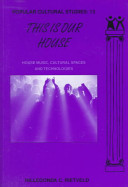 |
[book] This is Our House: House Music, Cultural Spaces, and Technologies. Aldershot, UK: Ashgate, 2003.
Explores the origins of house music in a variety of cities around the world. Areas under examination include Chicago and New York (USA); Manchester, Nottingham, and London (UK); and Rotterdam and Amsterdam (Netherlands). Rietveld explores the particular local influences that shaped the sound and distribution of the music in each region, while also pointing out the overriding similarities that exist across borders.
Available from UIUC library. |
 |
[article] “Submerge in Detroit: Techno’s Creative Response to Urban Crisis.” Journal of American Studies 45.1 (2011): 95-111
Ethnographic study of Detroit’s electronic music community and its response to the crisis their city is facing. Vecchiola follows the city’s largest independent music distribution company, Submerge, as its founders adapt to changing technologies and habits of consumption during the period of 1999 to 2007, and ultimately help define a “transnational” community. Their work reveals the “creative response of an urban community that counteracts the stereotype of a flat, homogeneous urban poor” (108). Includes some detailed accounts of day-to-day business practices.
Full text available online to UIUC. |
IIn addition to their geographic contexts, house and techno music have been understood as the expression of certain groups defined by gender and sexuality, or race and ethnicity. In the wake of the global popularity of rave music, it has also been possible to conduct studies that situate house and techno in terms of a more general subcultural group self-organization. The following readings focus on how identity is constructed by the producers and consumers of dance music culture.
 |
[article] “Post-Soul Futurama: African-American Cultural Politics and Early Detroit Techno.” European Journal of American Studies 24.2 (2005): 131-152.
Finds that early 1980s Detroit techno has been underrepresented in studies of African-American cultural identity. Albiez’s piece is particularly concerned with the founding figures of Detroit techno, Juan Atkins, Derrick May, Kevin Saunderson, and Eddie Fowlkes, describing their aesthetic as “post-soul,” and characterized by a reaching both within and outside of traditionally African-American cultural signifiers to create a more globalized version of black identity than was available previously. Albiez pays particular attention in his account to techno’s connection to black science fiction.
Full text available online to UIUC. |
 |
[article] “Sampling Sexuality: Gender, Technology, and the Body in Dance Music.” Popular Music 12.2 (1993): 155-76.
Explores the role of gender identity in contemporary dance music. Bradby finds that despite recapitulating some of the familiar anti-feminist tropes prevalent in popular music production, “through sampling and recontextualizing female sounds, images, stereotypes, [dance music] has created different links between women, the voice, and sexuality” (173). Including a lengthy summary of the history of feminism in popular music.
Full text available online to UIUC. |
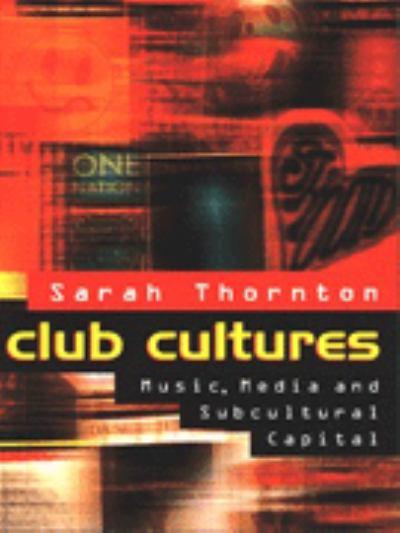 |
[book] Club Cultures: Music, Media, and Subcultural Capital. Hanover, NH: University Press of New England: 1996.
Analysis inspired by Pierre Bourdieu focuses on the cultural capital or lack thereof that accrues to dance music cultural participation and identity. Thornton take a close look at electronic dance music in order to explore a wide range of topics centered around the notion of identity formation within a commercialized cultural space. Thornton’s work circles around some familiar themes such as “selling out,” the quest for authenticity, the idea of “belonging” that emerges from subcultural participation, and the stigmatization-in-reverse of the mainstream. Overall the book endeavors to provide an almost-ethnographic approach to the lives of the individuals whose identities revolve around the social aspect of dance music.
Available from UIUC library. |
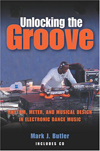 |
[book] Unlocking the Groove: Rhythm, Meter, and Musical Design in Electronic Dance Music. Bloomington: Indiana University Press, 2006.
A somewhat technical account of the forms and structures of dance music. With chapter titles like “metrical dissonance” and “multimeasure patterning,” Butler provides an introduction to electronic dance music that focuses on analyzing the constituent parts of individual tracks, using extensive musical notations to help illustrate his points. Also included is a more conceptual chapter discussing the notion of time in electronic dance music, analyzing the role time signature plays in a number of recordings.
Available from UIUC library. |
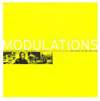 |
[book] Modulations: A History of Electronic Music: Throbbing Words on Sound. New York: Caipirinha Productions, 2000.
Covers the history of electronic music broadly, not limited to dance music genres like house and techno. In a series of articles and interviews with the producers and composers involved, Lee’s anthology recounts the story of electronic music’s earliest origins through sources such as French musique concrète, German kosmische music, and one of the pioneers of musical synthesis, Robert Moog. Covers a wide range of genres including hip-hop, ambient, post-punk, jungle, synth-pop, and freestyle.
Available from UIUC library. |
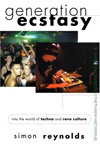 |
[book] Generation Ecstasy: Into the World of Techno and Rave Culture. New York: Routledge, 1999.
A widely-read introduction to a variety of dance music styles and themes, covering the years 1980 to 1997. The book traces the sound from its familiar 1980s origins in Chicago and Detroit through the bloom of rave culture across Europe and the U.S. in the early 1990s all the way to the “post-rave experimental fringe” that emerged in the mid- to late-1990s. Reynolds brings his own personal fandom and set of vivid recollections of the times and spaces he writes about into his work.
Available from UIUC library. |